Chewing, Boring and Sucking Insects on Trees and Shrubs
Three kinds of insects do most of the damage to landscape plants, and each leaves a different set of clues.
October 1, 2026 · 4 min read
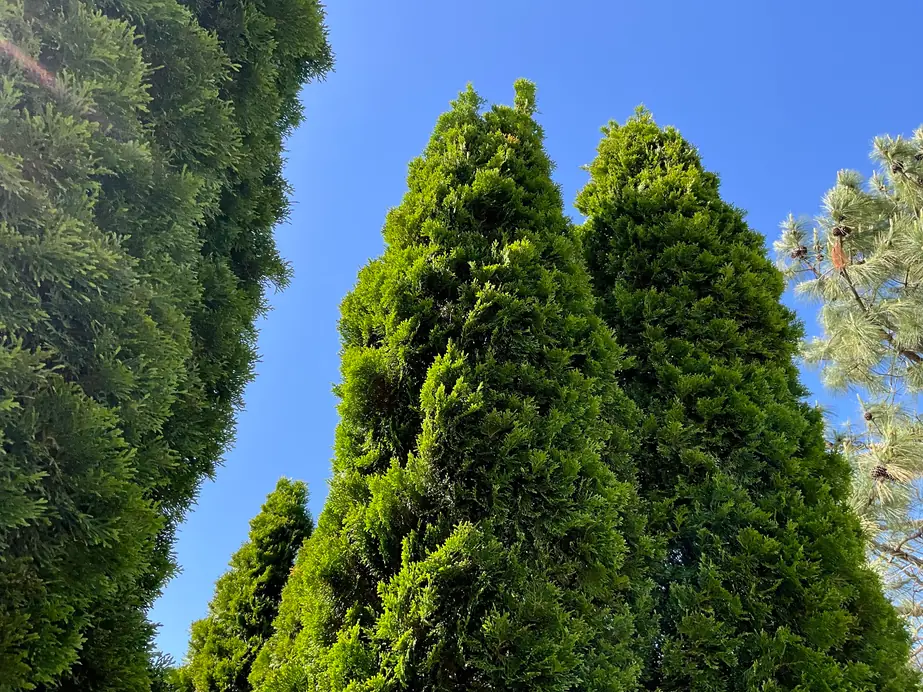
Walk any Northwest Arkansas yard in summer and you will find insects on the trees and shrubs. Most of them are harmless, and plenty are helpful. A few can seriously damage a plant if they go unnoticed. The hard part is telling which is which. EverGreen Lawns & Pest Control makes the same point on its trees and shrubs page: it can be difficult to determine what type of insect you are dealing with, and time-consuming to figure out what will get rid of it. The page sorts the troublemakers into three groups. Here is how to recognize each one.
Chewing insects
These are the easiest to spot because they eat the leaves. Caterpillars, beetles and sawfly larvae are common examples. You will see ragged edges, holes, or leaves that have been eaten down to the veins. On evergreens like arborvitae and juniper, look for small hanging bags or brown, thinning patches.
A healthy plant can lose a fair amount of foliage and recover. The concern is repeated defoliation season after season, or a young plant that loses most of its leaves at once. Check how widespread it is before you decide it needs treatment.
Boring insects
These are the hardest to catch, because the damage happens inside the tree. The larvae tunnel beneath the bark and through the wood. By the time you notice, the tree has often been dealing with it for a while. Clues to watch for:
- Small round exit holes in the bark of the trunk or branches.
- Fine sawdust-like material at the base of the tree or in the bark crevices.
- Sap oozing from the trunk, or a limb that dies back for no clear reason.
- A canopy that thins out on one side while the rest of the tree looks fine.
Boring insects tend to go after trees that are already stressed, by drought, root damage from construction, mulch piled against the trunk, or poor soil. A tree that is already struggling is the easy target.
Sucking insects
Aphids, scale insects and lace bugs feed on the sap of the plant, and so do mites, which are not insects but cause similar damage. They are small, and they work in numbers. You rarely see the damage as a hole. You see its side effects.
- Sticky residue on leaves, branches and anything underneath, such as a car or patio furniture. This is honeydew.
- A black, sooty coating that grows on that residue.
- Yellow speckling or stippling on leaves, and curled or distorted new growth.
- Small bumps on twigs and stems that look like part of the bark. Those can be scale.
If ants are running up and down a tree, there is often something on it that they are tending, since ants feed on honeydew.
Why plant health matters as much as the bug
A plant under stress is a plant that insects find. Trees and shrubs need consistent fertilization and maintenance to stay healthy, and that is where we start. Feeding, correct watering and good mulching habits (a flat layer, kept away from the trunk) give a tree the strength to hold its own. Insect control works best on a plant that is otherwise in decent shape.
Where tree injection fits
Spraying is the familiar way to treat a tree, but it is not the only way. Tree injection puts the treatment directly into the tree itself instead of over the canopy. Depending on the situation, that can be useful for large trees that are hard to spray, for plants close to a house, patio or play area where you would like to limit spray drift, or for pests that are hard to reach from the outside.
It is not right for every tree or every pest, and the right choice depends on the species, the problem and the time of year. Injection also means small openings in the tree, so it is a job for someone trained to do it, not a weekend project.
EverGreen is a Mauget Injection Technology certified applicator, so injection is something they can discuss as an option when it suits the tree. The decision should follow the diagnosis, not the other way around.
What to note before you call
- Which plant it is, and which part is affected: leaves, twigs, trunk.
- When you first noticed it, and whether it is spreading.
- A clear photo of the damage and, if you can get one, of the insect.
- Recent changes: construction, a dry spell, new mulch, a plant that was moved.
One customer, Kyle Collins, wrote in a Google review that EverGreen provides “excellent lawn care, pest control and tree shrub services.” EverGreen's tree and shrub care is available a la carte, with a range of programs and packages to choose from.
If something looks wrong on a tree or shrub at your place in Springdale, Fayetteville, Rogers, Bentonville or anywhere in Northwest Arkansas, see the Trees & Shrubs page under Services, or call EverGreen at (479) 231-7477 and describe what you are seeing.
EverGreen Lawns & Pest Control, (479) 231-7477
Call (479) 231-7477More articles
Why Lime Goes Down on Northwest Arkansas Lawns
If your lawn stays pale and thin no matter how much you feed it, the problem may be sitting in the soil, not in the bag.
Why Crabgrass Keeps Coming Back, and What Spot Spraying Does
Crabgrass dies every fall and shows up again every summer. Knowing why is most of the fight.