Why Lime Goes Down on Northwest Arkansas Lawns
If your lawn stays pale and thin no matter how much you feed it, the problem may be sitting in the soil, not in the bag.
October 1, 2026 · 4 min read
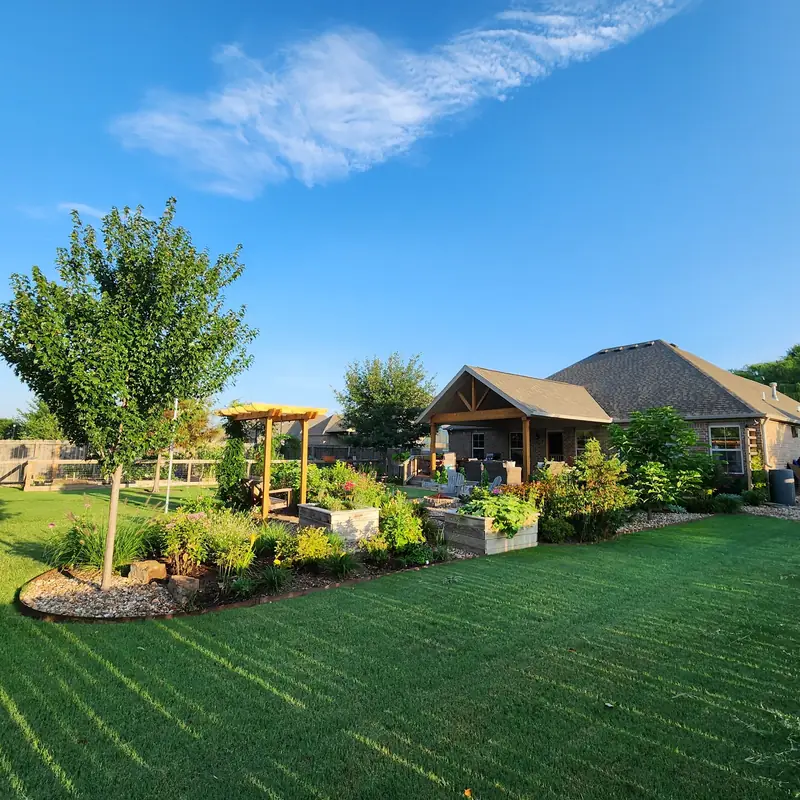
Most people picture lawn care as fertilizer and weed control. Lime sounds like a different job entirely, something for pastures and vegetable gardens. Yet lime application is part of the lawn treatment service at EverGreen Lawns & Pest Control, and for a plain reason: feeding turf back to health includes correcting the pH of the soil underneath it. Here is what that means and why it matters before you spend another dollar on fertilizer.
What soil pH actually measures
pH is a scale that tells you how acidic or alkaline your soil is. Seven is neutral. Lower numbers are more acidic and higher numbers are more alkaline. Most lawn grasses do their best in soil that sits close to the middle of the scale, a little on the acidic side of neutral. Where your yard lands depends on the dirt itself, the rainfall it gets, and what has been added to it over the years.
Many soils in the Ozarks lean acidic. That is a general pattern, not a promise about your yard, and the only way to know is to test. Two properties on the same street can read differently, especially in a newer subdivision where the original topsoil was scraped off and rebuilt during construction.
Why pH changes how well grass can eat
Here is the part that surprises people. Fertilizer can be sitting in the soil and still not do its job. Soil pH influences how available nutrients are to the roots. When soil is too acidic, some nutrients get tied up and the grass cannot take them in efficiently. The soil life that helps break down thatch and release nutrients also tends to work better in a friendlier pH range.
The result looks like a lawn that is hungry no matter how much you feed it. It stays pale, thin and slow to recover. Weeds that tolerate poor conditions move into the thin spots. You add more fertilizer, not much changes, and the money goes into the ground without the payoff.
One EverGreen customer put the long view this way in a Google review: “They also took the time to address soil pH issues, which really made a long-term difference.” (Austin Davis, Google review.)
What lime does, and what it does not
Lime is a ground rock product, usually limestone based, that raises soil pH. In other words it makes acidic soil less acidic. It is a soil correction, not a meal for the grass. EverGreen describes it on their lawn treatment page as lime application that corrects the pH balance in the soil, as part of their lawn fertilization service.
It is also slow. Lime has to dissolve and work down into the root zone, and on an established lawn it goes on the surface and is not mixed in. Think in months, not days. Nobody should expect the grass to turn green the week after lime goes down.
Lime is not a weed killer, it is not a fertilizer, and it does not fix shade, compaction or a drainage problem. If water stands in the low corner of your yard, lime will not change that. Be wary of anyone who sells it as a cure-all.
Why a soil test comes first
Guessing at lime is a bad idea. Too little does nothing, and too much pushes the soil the other way and creates nutrient problems of its own. How much a given yard needs depends on the current pH, the soil type and the grass, which is why a test is the starting point instead of a bag off the shelf. Your county's cooperative extension office is a good place to ask about soil testing, and you can bring in a sample from your own yard.
If you have a lawn company treating your yard, ask them straight out whether pH has been checked. A company that works from the soil instead of the calendar will have an answer.
What to expect once pH is in range
- A slow change. Treat it as a season-long project, not a quick fix.
- Fertilizer that works better, because the roots can use more of what you apply.
- Fewer thin patches over time. Thin turf is where weeds get their start.
- A retest down the road, since soil that leans acidic tends to drift back that way as rain and years go by.
EverGreen's lawn treatment page lists weed reduction, increased growth and disease resistance as the benefits of a feeding program. Correcting pH is one of the pieces behind them, and it is easy to skip because you cannot see it.
So should your lawn get lime?
Maybe, maybe not. If your grass is pale, thin and slow to respond, pH is one of the first questions worth asking, right alongside sun, water and mowing height. If the pH is already where it should be, lime is wasted money and your lawn is telling you something else. Either way you want that answer from a test, not a hunch.
EverGreen offers individualized lawn treatment services and packages across Northwest Arkansas. You can read more on the Lawn Treatment page under Services, or call (479) 231-7477 and ask about your yard.
EverGreen Lawns & Pest Control, (479) 231-7477
Call (479) 231-7477More articles
Why Crabgrass Keeps Coming Back, and What Spot Spraying Does
Crabgrass dies every fall and shows up again every summer. Knowing why is most of the fight.
What a Quarterly Perimeter Treatment Does About Ants and Spiders
A visit every 90 days sounds simple. Here is what each part of it is for.